
HZ-0 Deep Time / The Infinite Score
Proposal for a Long-Duration Distributed Artwork
Initiated in 2027
Project Overview
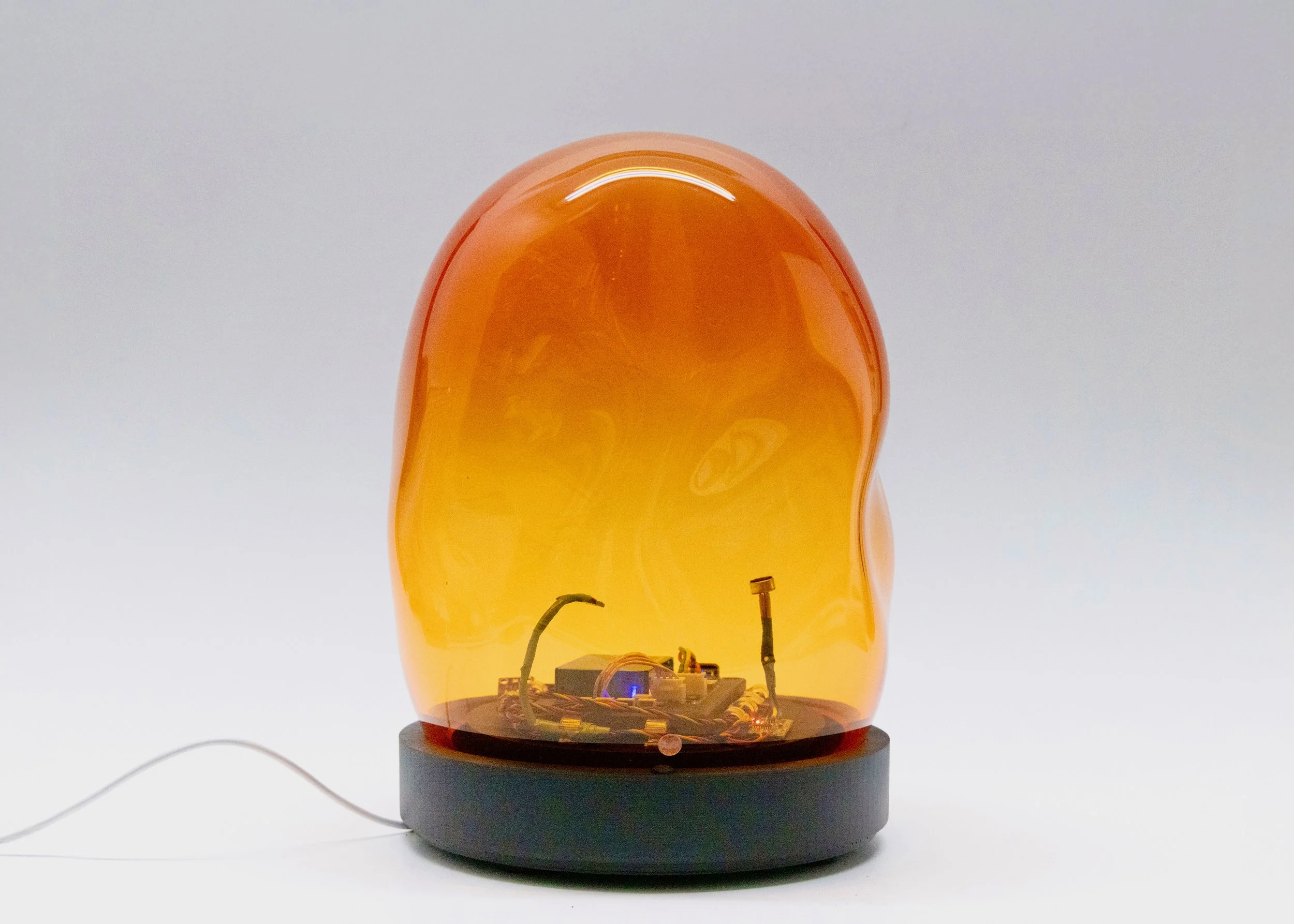
HZ-0 Deep Time / The Unfinished Score is a sound and data artwork conceived through the temporal framework of deep time. It unfolds incrementally across multiple sites and exhibition periods.
At the centre of the project is HZ-0, a sensing installation that continuously reads the environmental conditions of its immediate surroundings and translates local atmospheric data into an evolving soundscape. Alongside these real-time conditions, the system draws upon planetary datasets, introducing a second temporality that exceeds the scale of any single site or individual experience.
During each exhibition or agreed activation period, HZ-0 requires a complete technical system - a Mac mini, the sensing device, transducers and four to eight speakers - which is intended to remain operational throughout the scheduled exhibition hours. The project does not, however, require the same equipment to operate continuously between exhibitions or for an indefinite duration. Instead, the longer life of the work is composed of finite but interconnected activation periods. Each time HZ-0 is installed and activated at a particular site, it begins to write a new chapter.
HZ-0 Deep Time
HZ-0 is an environmental listening system.
The instrument senses multiple conditions within its immediate surroundings and translates their fluctuations into sound. Rather than presenting environmental data numerically or using sound simply to illustrate scientific information, HZ-0 treats data as a perceptual interface through which environmental processes can be encountered sensorially.
The resulting soundscape is never predetermined.
As atmospheric and environmental conditions change, the relationships between tone, rhythm, resonance, vibration and spatial behaviour continually shift. The installation therefore exists in a permanent state of composition.
Alongside locally sensed environmental conditions, the system introduces planetary datasets associated with much longer temporal processes. These generate an additional sonic and vibrational register within the installation.
Sound design by Dave Meckin
HZ-0 data mapping
The work consequently brings together two radically different scales of time:
the environmental present of the site and the planetary duration of deep time.
HZ-0 does not attempt to represent an ecosystem in its entirety. Instead, it creates a partial, situated translation—a temporary encounter between environmental processes, technological sensing, and human perception.
The First Chapter: 2026–2027
The first HZ-0 Deep Time instrument began its initial continuous cycle in May 2026. (currently showing at the Shenzhen International Museum of Art)
It will remain active until the end of April 2027, producing an uninterrupted year-long environmental soundscape.
These twelve months form the opening chapter of The Infinite Score. As the conditions around the installation change, the system records a complete seasonal cycle. This phase constitutes an independent artistic outcome while also establishing the conceptual and technical basis for later versions of the project.
If temporary shutdowns or gaps in data occur during this period, they will remain visible as intervals in the record rather than being retrospectively filled with simulated data.
Install View at the Shenzhen Art and Technology Biennial (SATB), Shenzhen International Museum of Art. The Infinite Score
A central question emerging from HZ-0 concerns memory. If an artwork is continuously generating sound over years—or potentially a century—what remains of everything that has already happened?
A conventional audio recording captures the acoustic output of a particular moment, but it freezes a generative work into a single fixed representation.
The Infinite Score hence proposes a different form of memory.
Beginning with the 2027 iteration of HZ-0, the same environmental parameters that generate the sound will simultaneously generate a continuously evolving graphic notation.
The process can be understood as:
environmental conditions → generative system → sound + graphic trace
The visual score is therefore not an illustration of the sound, nor is the sound a sonification of the drawing. They both emerge simultaneously from the same underlying environmental conditions, and each becomes a different perceptual manifestation of the same process.
A New Graphic Notation
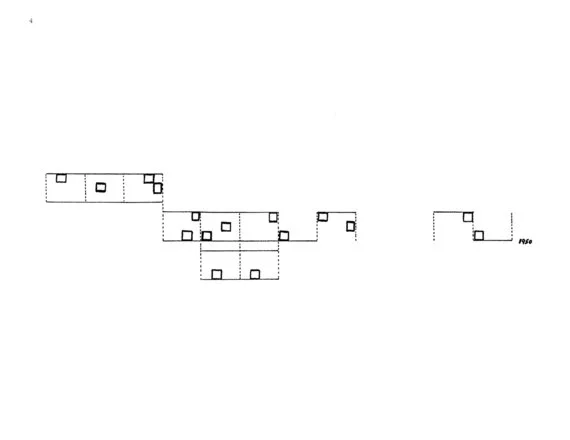
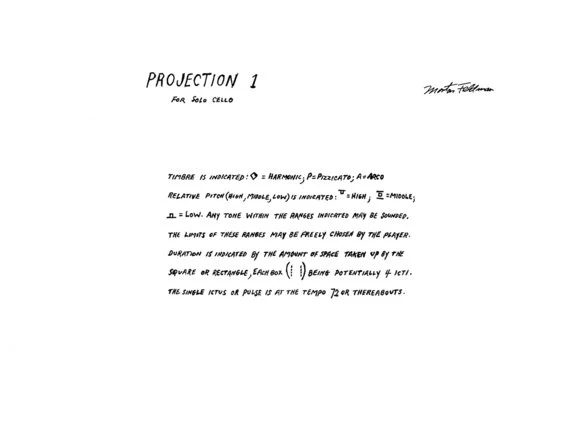
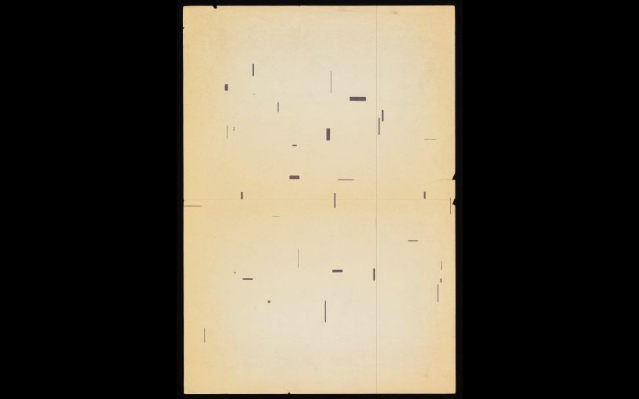
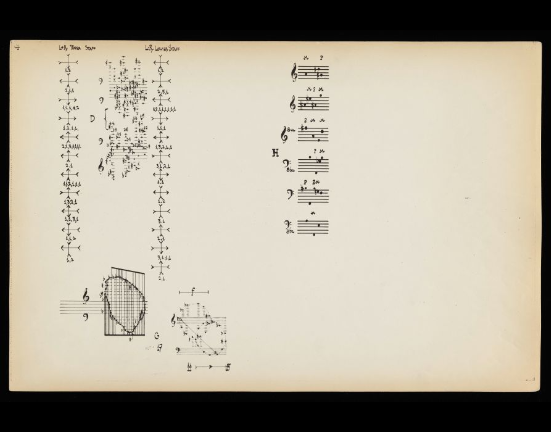
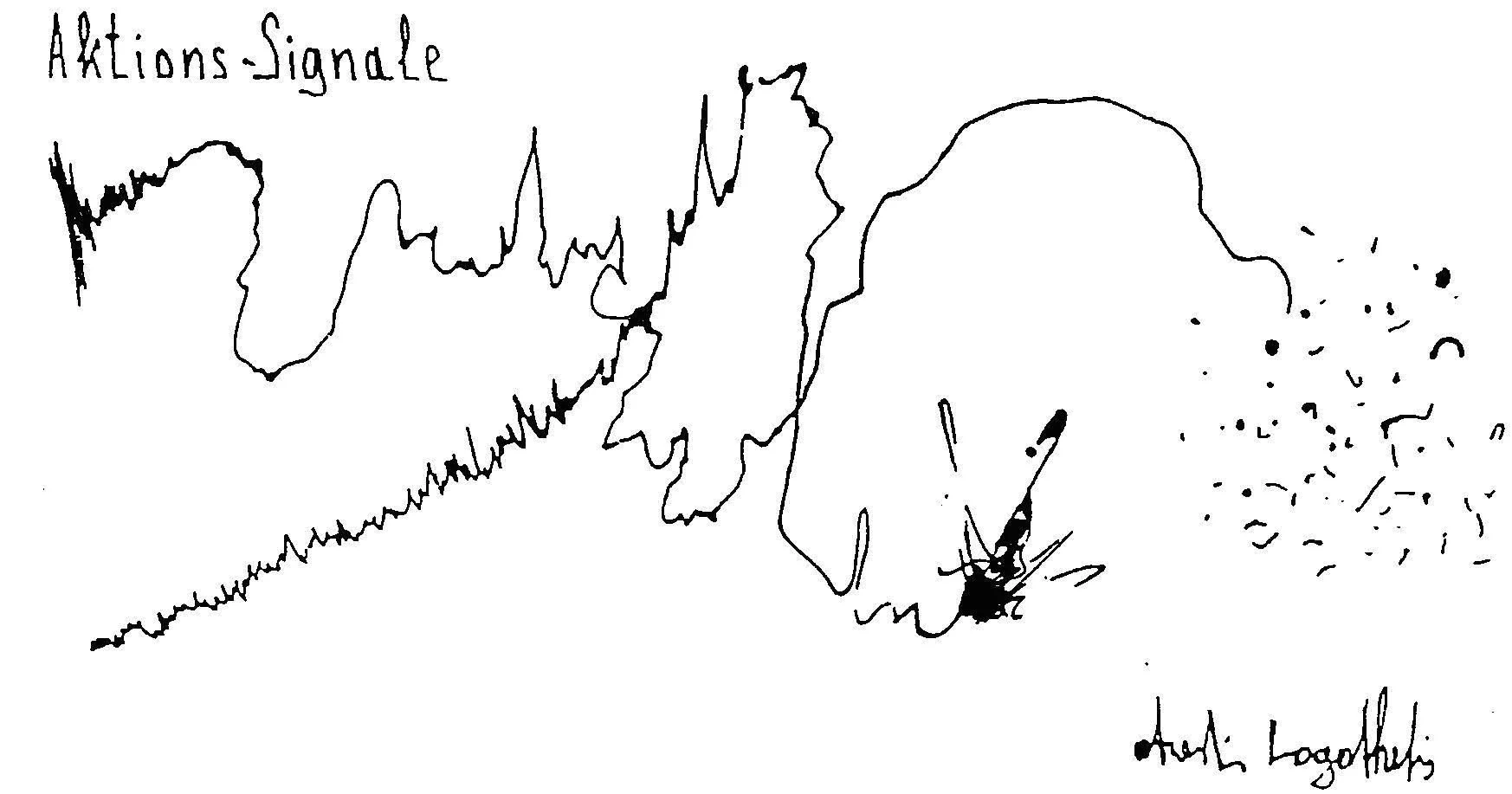
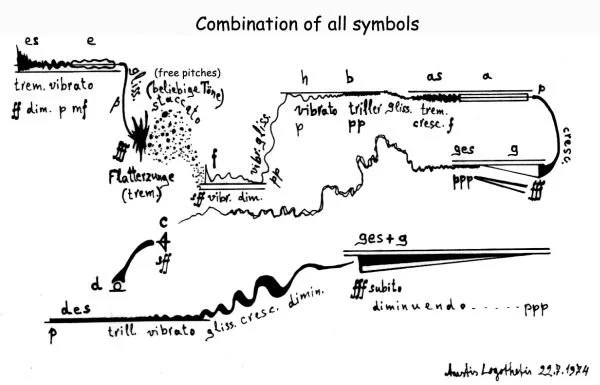
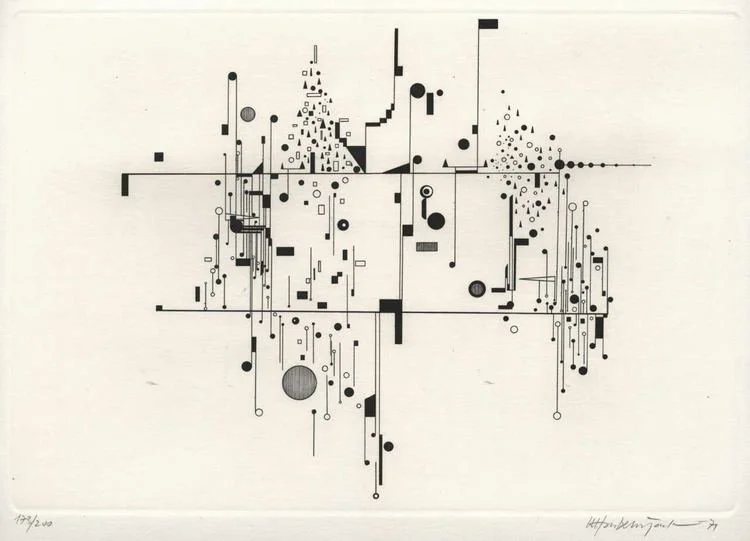
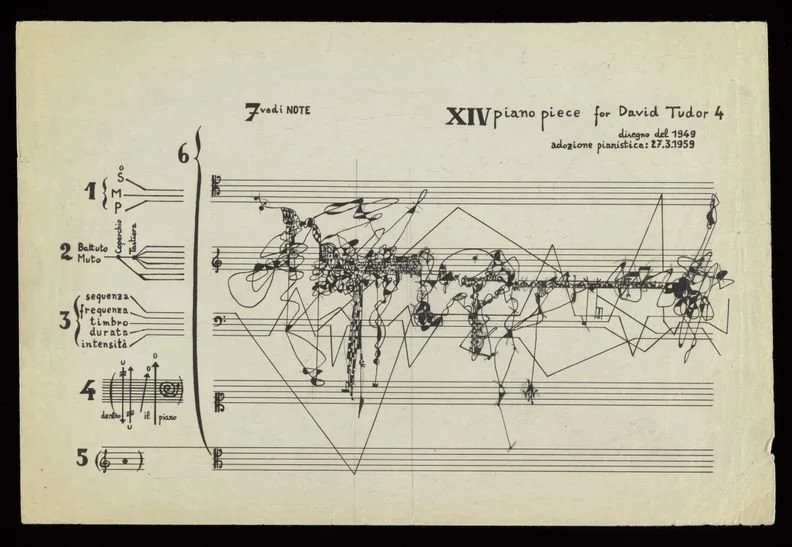
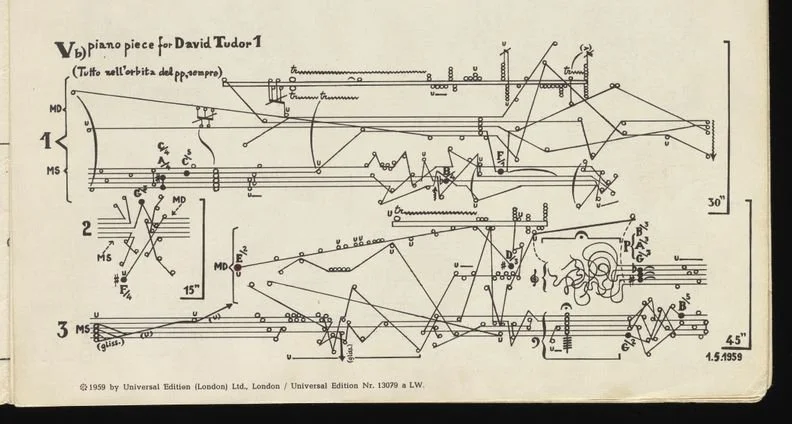
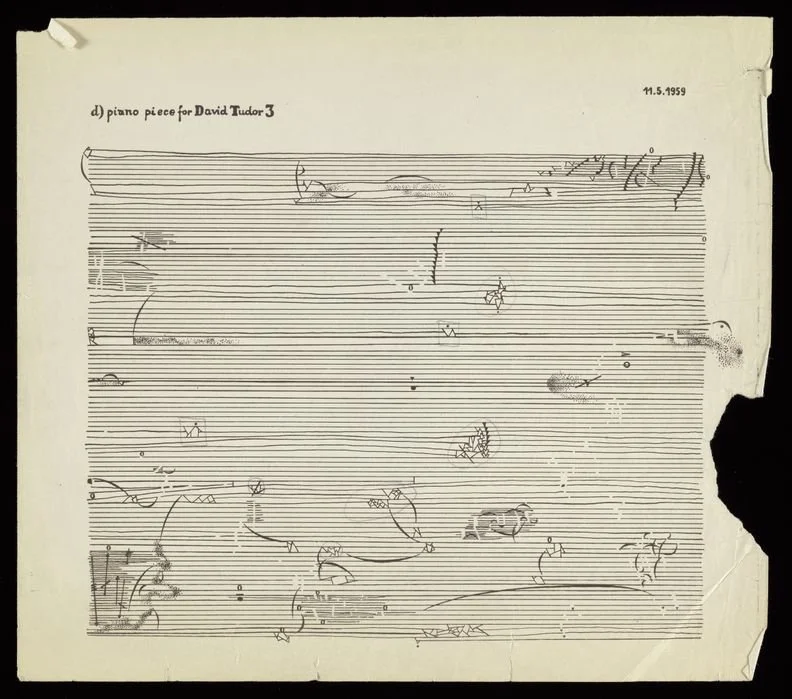
The project draws upon the history of experimental musical notation, in which composers have expanded the concept of the score beyond conventional Western notation.
Graphic scores have allowed line, density, direction, geometry, duration and spatial relationships to operate as musical instructions rather than fixed notes.
The Infinite Score extends this history into environmental and computational time. Here the artists do not compose individual marks. Instead, a system of visual rules is established through which environmental processes continuously produce notation. Changes in environmental conditions may influence qualities such as line, density, rhythm, direction, accumulation, curvature, transparency, or interruption. Over time, these marks accumulate into visual fields.
Each page is therefore simultaneously:
a drawing,
a temporal record,
a musical score,
and a machine-readable trace.
The notation remains intentionally open to interpretation, which means future musicians may read it differently from contemporary musicians. Future computational systems may discover relationships within the score that are not perceptible to its original creators.
-
![]()
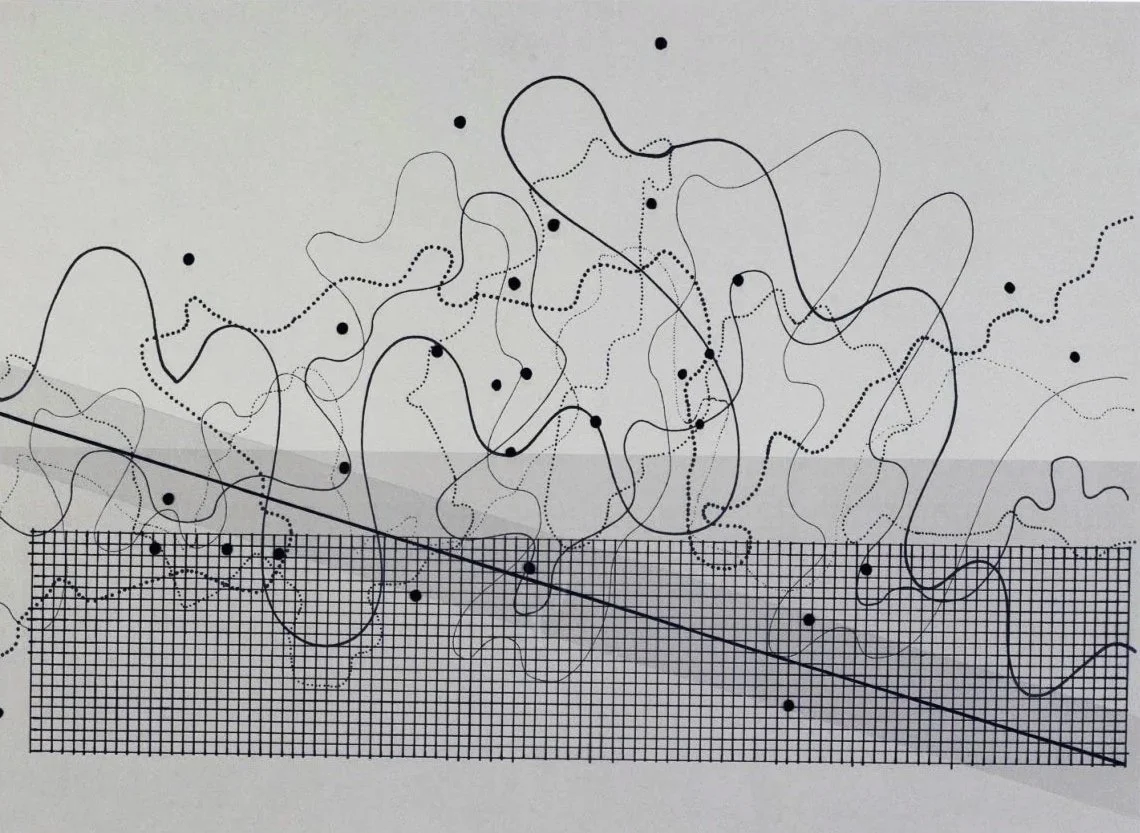
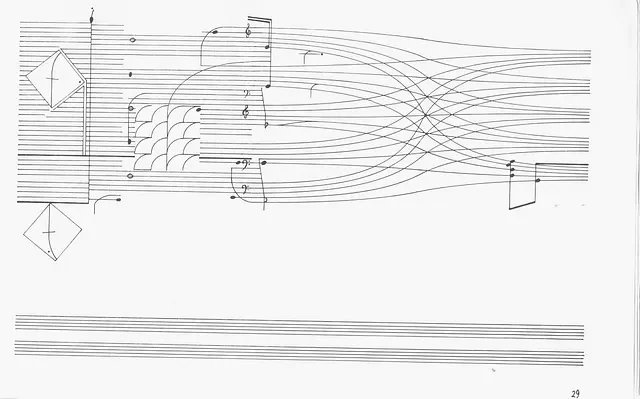
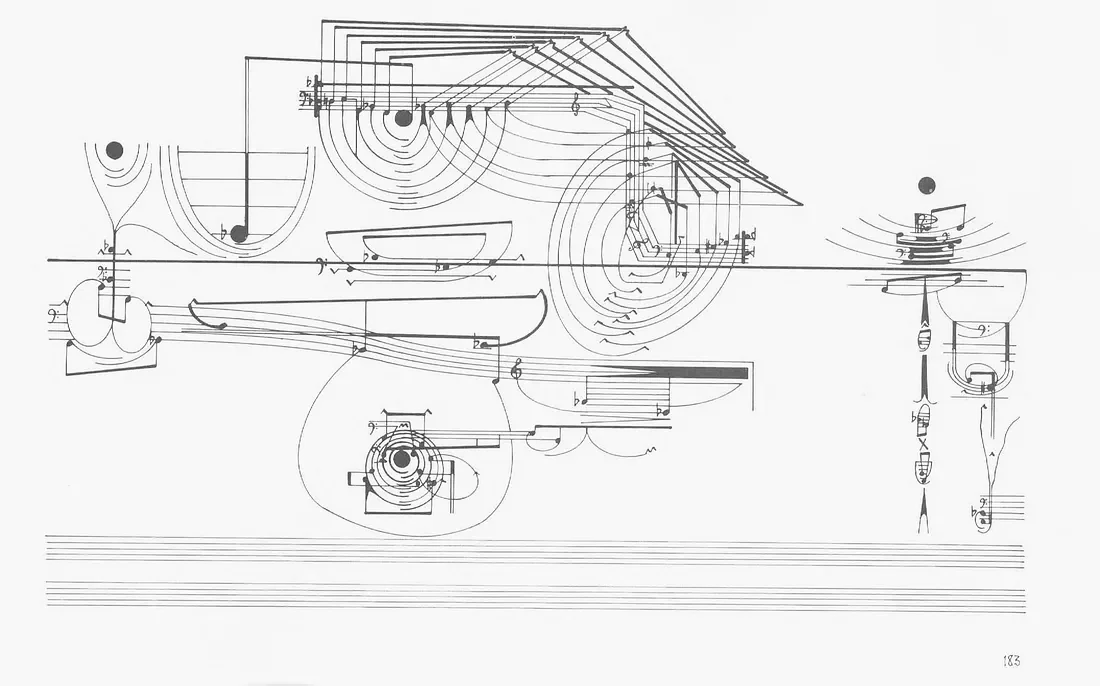
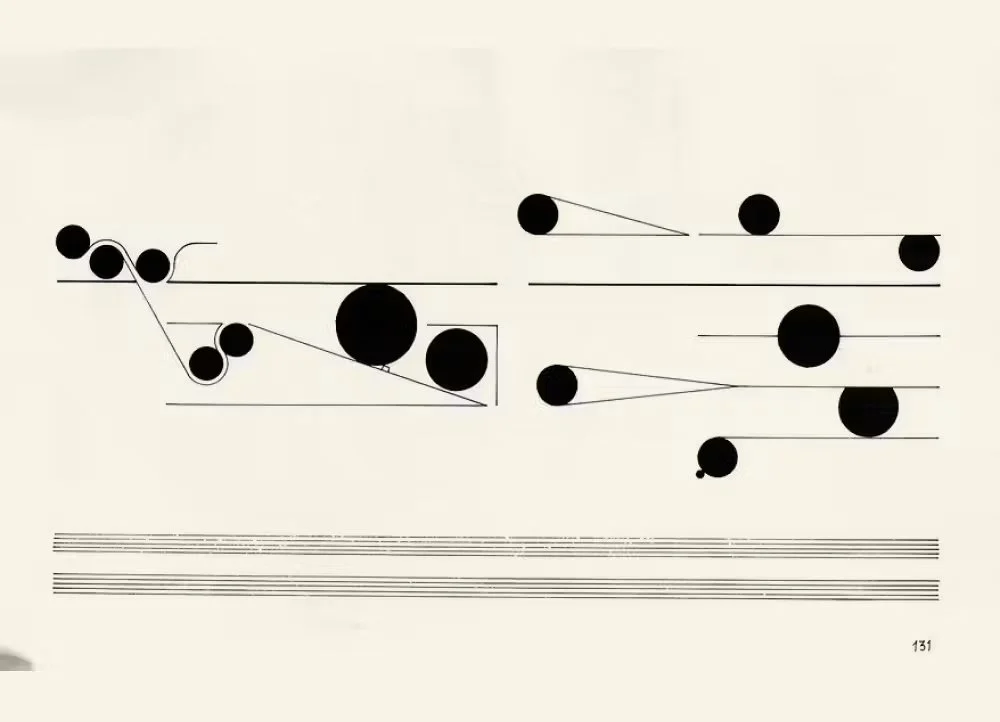
Cornelius Cardew, Treatise(1963-1967)
-
![]()
Cornelius Cardew, Treatise(1963-1967)
-
![]()
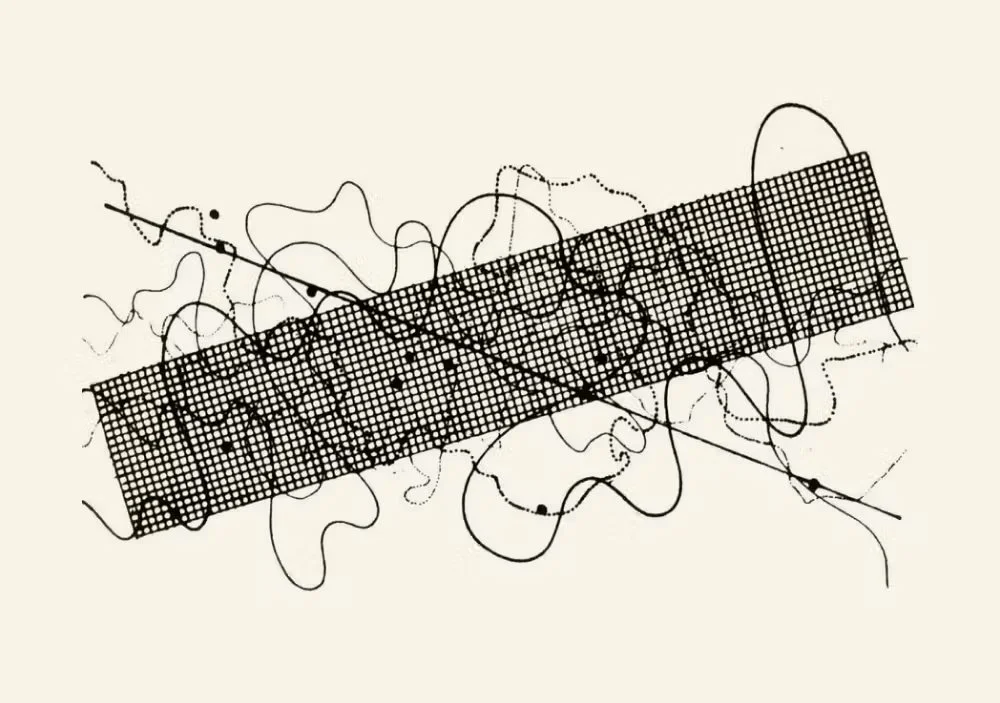
John Cage, Fontana Mix (1981)
-
![]()
Arguably the greatest musical score ever designed, a pinnacle of graphic notation is by Cornelius Cardew, entitled Treatise (1963–1967). The piece comprises 193 pages of highly abstract scores. This is the Sistine Chapel of notation. His training as a graphic designer is obvious. He even used principles of cognitive psychology, which is central to design.
-
![]()
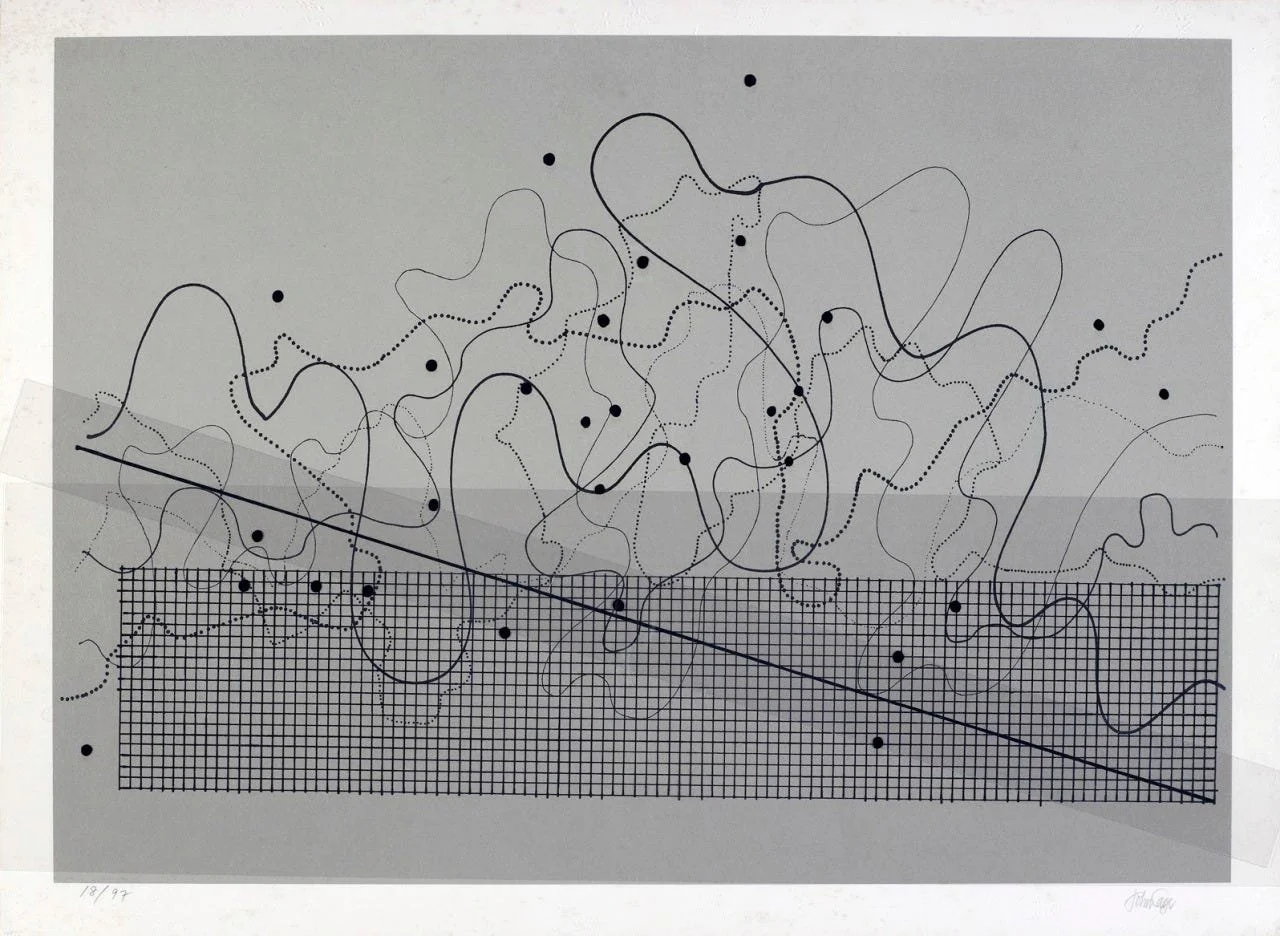
John Cage, Fontana Mix (1958)
-
![]()
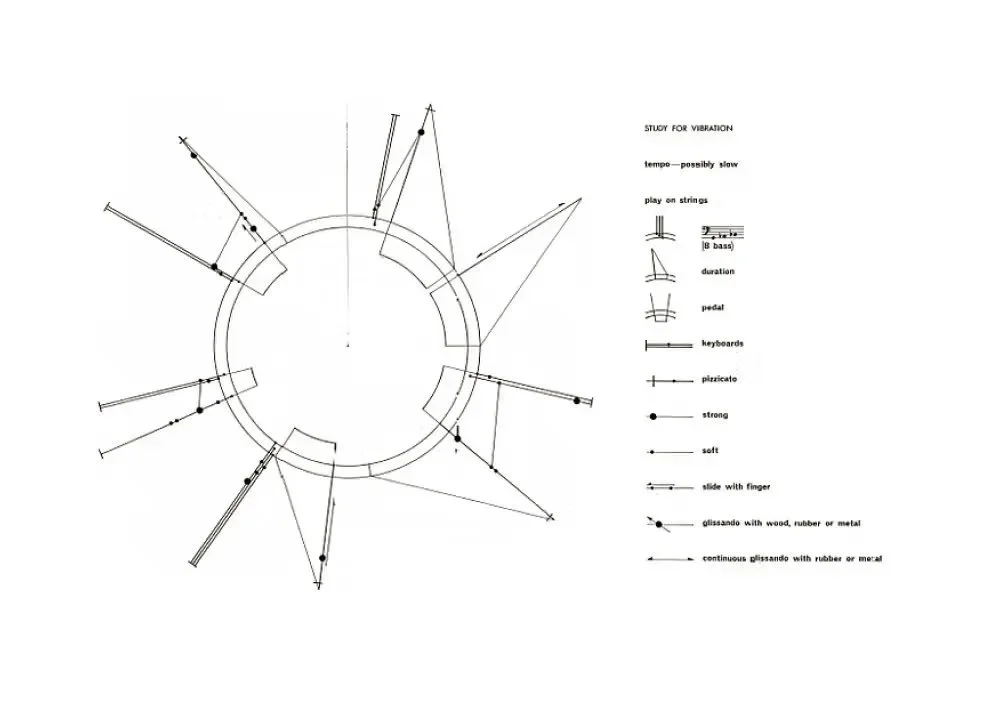
Toru Takemitsu, Study for Vibration (1962)
-
![]()
Feldman, Morton. Score for Projection 1 for solo cello, 1950. . In The Scores Project: Experimental Notation in Music, Art, Poetry, and Dance, 1950–1975, ed. Michael Gallope, Natilee Harren, and John Hicks. Los Angeles: Getty Research Institute, 2025. https://www.getty.edu/publications/scores/object-index/046/.
-
![]()
Brown, Earle. Score for December 1952 from Folio and 4 Systems inscribed “for David Tudor”, 1952. Getty Research Institute, David Tudor Papers, 980039, box 170, folder 1. In The Scores Project: Experimental Notation in Music, Art, Poetry, and Dance, 1950–1975, ed. Michael Gallope, Natilee Harren, and John Hicks. Los Angeles: Getty Research Institute, 2025. https://www.getty.edu/publications/scores/object-index/301/.
-
![]()
John Cage. David Tudor’s copy of John Cage’s Solo for Piano, from Concert for Piano and Orchestra, 1957–58. Getty Research Institute, David Tudor Papers, 980039, box 176, folders 1–2. In The Scores Project: Experimental Notation in Music, Art, Poetry, and Dance, 1950–1975, ed. Michael Gallope, Natilee Harren, and John Hicks. Los Angeles: Getty Research Institute, 2025. https://www.getty.edu/publications/scores/object-index/060/.
-
![]()
Anestis Logothetis, "Über die Darstellung des Klanges im Schriftbild", Impluse: für Spielmusikgruppen, Universal Edition, Wien, 1973, p. 3-9
-
![]()
Anestis Logothetis, "Über die Darstellung des Klanges im Schriftbild", Impluse: für Spielmusikgruppen, Universal Edition, Wien, 1973, p. 3-9
-
![]()
Roman Haubenstock-Ramati, Konstellationen (1972)
-
![]()
David Tudor’s personal copy of No. 4 from Sylvano Bussotti’s Five Piano Pieces for David Tudor, with pencil annotations by Tudor, as found in loose pages from Bussotti’s Pièces de chair II, 1958–60. Getty Research Institute, David Tudor Papers, 980039, box 174, folder 3.
-
![]()
David Tudor’s personal copy of No. 1 from Sylvano Bussotti’s Five Piano Pieces for David Tudor, 1959. Getty Research Institute, David Tudor Papers, 980039, box 174, folder 2.
-
![]()
David Tudor’s personal copy of No. 3 from Sylvano Bussotti’s Five Piano Pieces for David Tudor, with pencil annotations by Tudor, as found in loose pages from Bussotti’s Pièces de chair II, 1958–60. Getty Research Institute, David Tudor Papers, 980039, box 174, folder 3.
Three Instruments / Three Sites
For the 2027 phase, the project proposes the activation of three HZ-0 instruments at three locations internationally, and embody distinctly different ecological conditions and temporalities.
Each instrument operates autonomously while contributing to a shared archive and produces its own chapter of the score. At certain moments the scores may be presented independently. At others they may be brought together. A performance might therefore place three different environments into dialogue within the same room.
The final sites would be developed in dialogue with participating institutions and research partners.
A Living Archive & Temporal Chapters
During each activation period, the graphic score gradually accumulates within a digital archive. At the end of an activation, the notation may be organised as a new volume or chapter. It may take the form of an artist's book, a digital publication, a machine-readable archive or a score for performance.
Here the physical publication does not attempt to reproduce every moment generated during the period. Instead, it gives material form to an ongoing process so that it can be preserved and revisited.
Performance
Completed passages of the score may be reactivated through live performance. Musicians are not invited to reproduce the original HZ-0 soundscape, but to interpret its notation.
A performance may involve a solo musician, ensemble, electronic musician, choir, experimental orchestra, or a combination of acoustic and computational instruments. Different performers may produce radically different readings of the same environmental score. No single performance is treated as definitive or authoritative.
Human and Machine Interpretation
The graphic notation will also retain an underlying machine-readable structure. This is important to the long-term proposition of the work. A human performer may interpret a line intuitively—as duration, gesture, rhythm or pitch. A computational system may read the same line through its encoded parameters.
The score therefore exists between two modes of interpretation: human reading and machine decoding.
Neither is considered definitive. This openness allows The Infinite Score to remain technologically adaptable. This means the software used to create HZ-0 today will inevitably become obsolete. The score, however, can survive beyond any particular technical platform. Future systems may reconstruct, reinterpret or transform its accumulated environmental histories.
Fast-forward hypothetical composition of the next one hundred years ©davemeckinInstitutional Collaboration
A museum, foundation or other partner institution may host a clearly defined activation period, such as an exhibition, a season, one year or a multi-year research phase.
A participating institution is not responsible for the work's intended century-long scale or for its operation at other sites. Its responsibilities are limited to the agreed period of collaboration and may include presenting the installation, supporting the generation of data and notation during that period, and developing any publication or performance programme separately agreed with the artist.
When a collaboration ends, the work may enter dormancy, move to another site or be reactivated when future conditions allow.
The project's long duration therefore emerges gradually through relationships between multiple finite collaborations rather than through an open-ended commitment from any single institution.
Artistic Proposition
Our brief and situated lives cannot encompass the immensity of planetary and cosmic time, yet we are never separate from it. However small within these vast scales, every life remains entangled with the material processes through which the world continually takes form. At its centre, HZ-0 makes this relationship perceptible, allowing fleeting environmental events to accumulate across places and generations into an evolving visual and sonic memory beyond any single human lifespan.